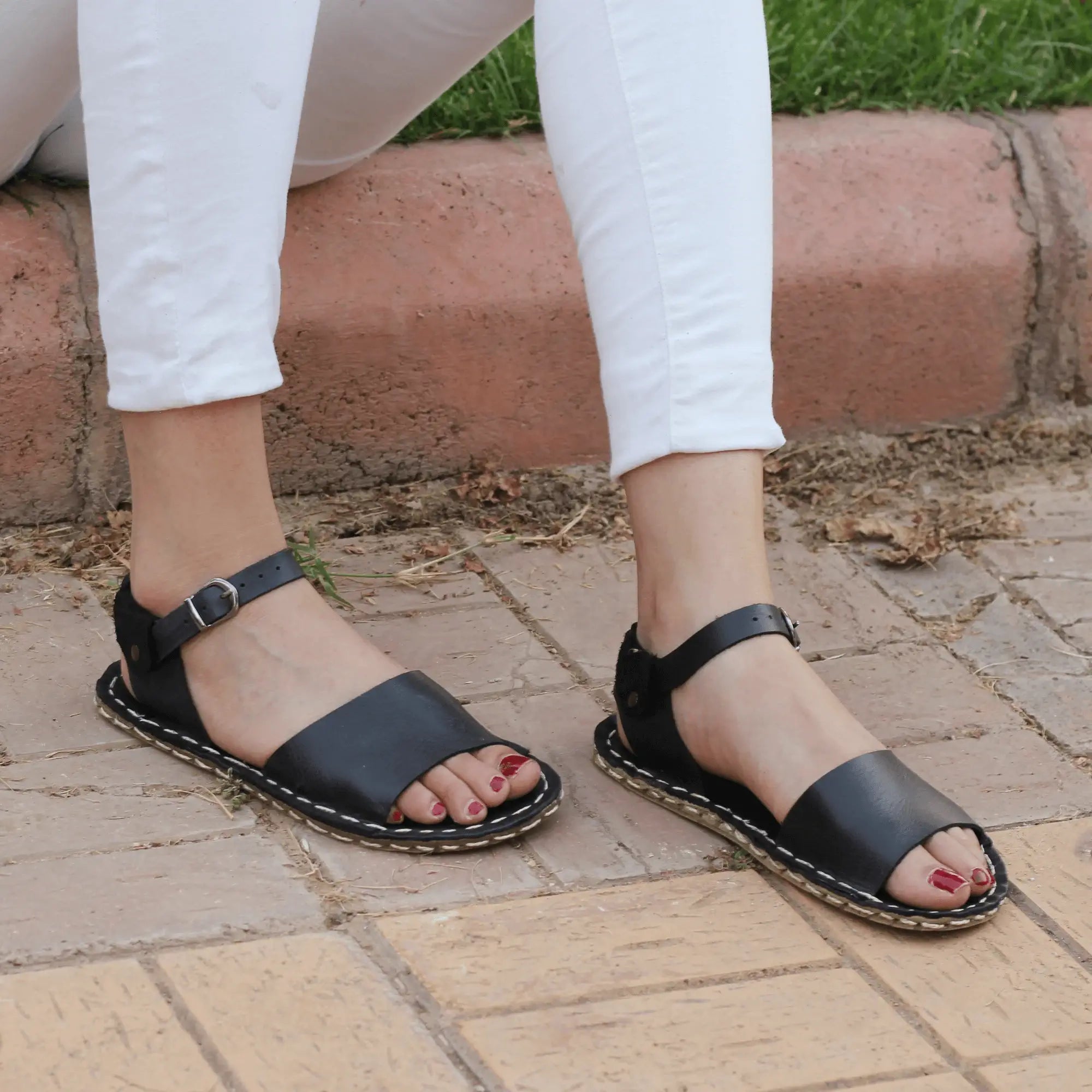
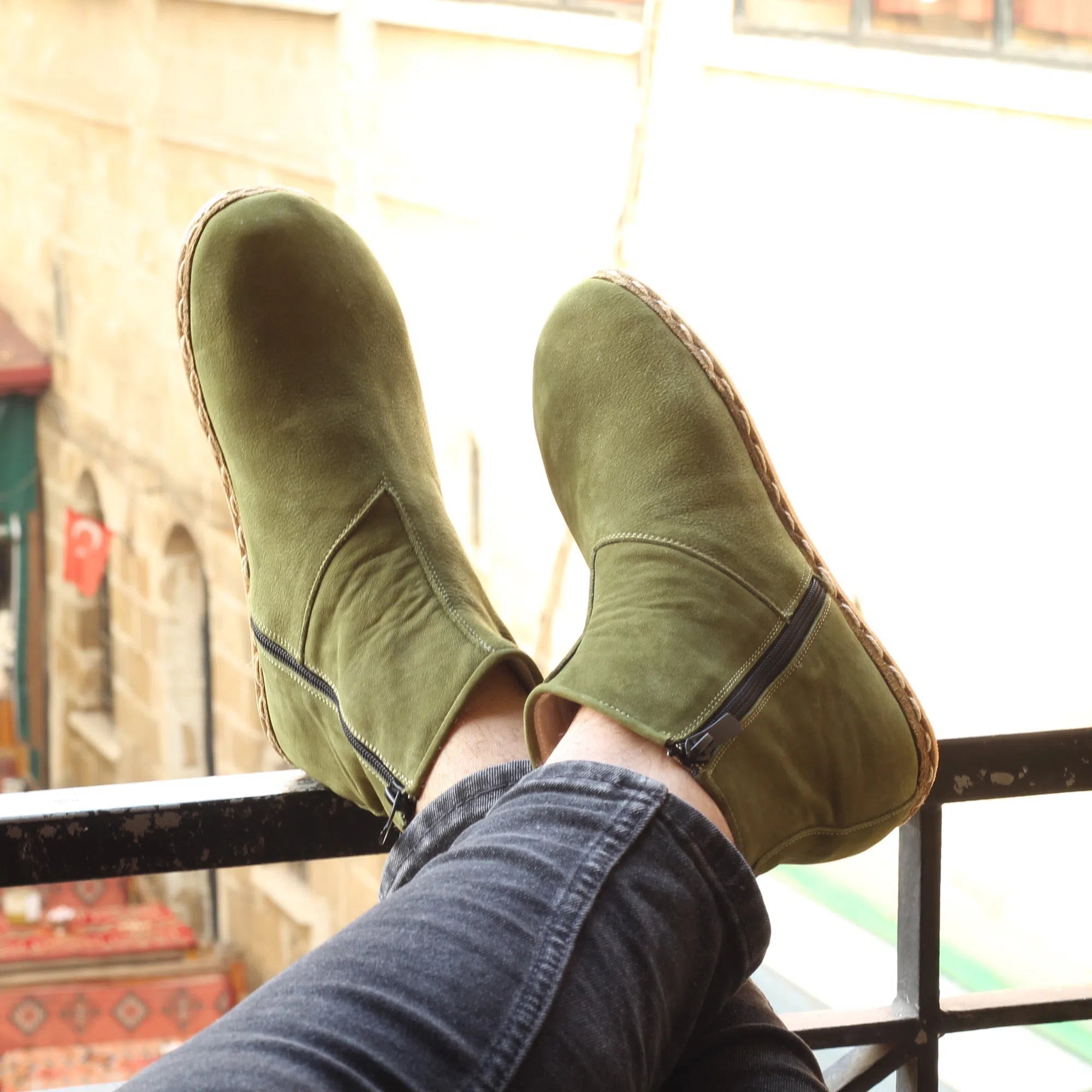
A leather sandal should feel like freedom, not a countdown to the first raw spot on your heel. If you want to wear leather sandals without blisters, the answer is not to toughen up and push through pain. It is to start with honest fit, let real leather adapt gradually, and pay attention to the places where your feet naturally move.
Blisters are friction injuries. They form when skin repeatedly rubs against a strap, edge, or footbed while heat and moisture weaken the skin’s surface. That means prevention is practical: reduce rubbing, avoid trapped sweat, and choose sandals that allow your feet to move as feet were designed to move - wide, grounded, and uncompressed.
Start With Sandals That Actually Fit Your Feet
Most sandal blisters begin before you take your first walk. A sandal that is too short allows the heel or toes to hang near the edge. One that is too narrow pulls straps across the forefoot and squeezes the toes together. One that is too loose lets the foot slide forward with every step. None of these problems are solved by a longer break-in period.
Check the length first. Your heel and toes should sit comfortably within the sole’s perimeter, with a little room for natural foot expansion on warm days. Then look at the shape. Your forefoot is not a triangle, and your toes are not meant to be pressed into a tapered front. A sandal with a foot-shaped, wide toe box lets the toes spread and helps prevent the rubbing that occurs when the foot is forced inward.
Straps should hold the sandal in place without leaving deep marks. You should be able to slide a finger under an adjustable strap, but your foot should not drift forward or side to side as you walk. Pay special attention to the strap across the top of the foot and the point where a thong-style sandal meets the toes. These are high-motion zones, so even a small fit issue can become a blister quickly.
Do not size down to make a sandal look sleeker
Conventional footwear has trained many people to accept a cramped fit as normal. It is not. A sandal may look refined while still giving your feet room to breathe, spread, and support your body naturally. Choosing a shape that respects your anatomy is not a style compromise. It is the foundation of comfort.
Break In Leather Slowly, Not Painfully
Natural leather is strong, breathable, and capable of softening around your foot over time. But it should not be asked to transform during a five-mile walk on day one. The goal is gradual adaptation, not a battle between skin and strap.
For the first few wears, keep your time short. Wear the sandals indoors for 20 to 30 minutes, then around the neighborhood for a brief walk. Notice any hot spots - areas that feel warm, pinchy, itchy, or unusually sensitive. A hot spot is your early warning system. Stop before it becomes a blister.
Increase wear time over several days. If the sandal feels good after an hour, try a longer errand or an easy walk. Save travel days, festivals, city sightseeing, and all-day standing for after you know how the sandals behave on your feet. Leather does relax and conform, but it cannot compensate for a sandal that starts out fundamentally wrong for your foot.
If a strap is stiff, gently flex it with your hands before wearing it. You can also use a very small amount of leather conditioner on the outside and underside of a thick strap, following the product directions and testing an inconspicuous area first. Over-conditioning can weaken leather or change its finish, so restraint matters. The aim is supple leather, not soggy leather.
Protect Known Friction Points Before They Hurt
You do not need to wait for broken skin to take action. If you know your heel, little toe, or the space between your first and second toes tends to rub, protect that area before a longer outing.
A small piece of blister tape, moleskin, or a hydrocolloid bandage can create a low-friction barrier. Apply it to clean, dry skin with smooth edges so it stays put. For a sandal strap that has one rough or firm spot, a thin strip of soft tape on the inside of the strap may help during the break-in period. Keep the adjustment temporary and minimal. You still want to feel whether the sandal fits correctly.
Some people use anti-chafing balm on high-friction areas. This can be useful in dry conditions, especially where skin rubs against skin. In very humid weather, however, too much product can combine with sweat and make the foot slide more. Your climate, activity level, and skin sensitivity all matter.
Never ignore a recurring hot spot
If the same place becomes irritated every time you wear a sandal, investigate the cause. Is the strap sitting directly on a prominent bone? Is your foot sliding because the ankle strap is too loose? Is the sole too narrow for your forefoot? A recurring issue is feedback, not something to cover forever with bandages.
Keep Feet and Leather Dry Enough to Reduce Friction
Moisture makes skin softer and more vulnerable to rubbing. That is why a sandal that feels fine during a dry morning can become uncomfortable after a humid afternoon, a beach walk, or a long day on warm pavement.
Begin with clean, dry feet. If your feet sweat heavily, give them a moment to air out before putting on sandals, and consider a light foot powder if it works for your skin. Avoid heavy lotions right before wearing leather sandals. Softened, slick skin can slide against straps, while rich creams may also darken or stain natural leather.
The sandal itself needs care, too. Let leather sandals air dry completely after wear. Do not leave them in a closed gym bag, damp car, or direct blazing sun for hours. Excess heat can dry out and stiffen leather, while trapped dampness can create odor and make the footbed less pleasant against bare skin.
Natural leather is a smart material for warm-weather footwear because it can breathe better than many plastic-based alternatives. Still, no material can overcome a poor fit or a footbed that stays wet all day. Rotate pairs when possible, especially during a stretch of hot, active weather.
Let Your Walking Pattern Adjust to Minimal Sandals
If you are moving from thick, raised-heel shoes into flat, flexible sandals, your feet and lower legs may need time to adapt. Zero-drop footwear places the heel and forefoot at the same level, which supports a more natural relationship with the ground. But a different sensation underfoot can change how you walk at first.
Take shorter walks and pay attention to your stride. Many people overstride in heavily cushioned shoes, landing far ahead of the body. In a more minimal sandal, a shorter, quieter step often feels better and reduces the force that makes the foot slide into the front straps. Keep your posture tall, let your toes relax, and avoid gripping the sole with them.
Toe gripping is especially common in loose sandals. It can create friction under the toes and fatigue through the foot. A secure heel or ankle strap helps the sandal travel with your foot, rather than making your toes work to keep it on.
This adjustment period depends on your current footwear, activity level, and foot strength. There is no prize for switching overnight. Natural movement is built through consistent, comfortable use.
When a Blister Has Already Started
If you feel a blister forming, stop the rubbing as soon as you can. Clean and dry the area, then cover it with a protective dressing before putting the sandal back on. An intact blister roof usually protects the skin beneath it, so avoid popping it unless a medical professional advises otherwise.
Do not wear the same sandal over the irritated area until you have identified what caused the friction. If the blister is painful, shows spreading redness, warmth, drainage, or signs of infection, seek medical care. People with diabetes, circulation concerns, or reduced foot sensation should be especially cautious with any foot injury.
Choose Comfort That Does Not Ask Your Feet to Shrink
The best leather sandals do more than look good with summer clothes. They give your feet space, use materials that soften with wear, and stay close enough to the ground that you can feel stable and connected in every step. Handmade leather footwear, such as Nefes Shoes sandals, is designed around that idea: less restriction, more natural movement, and a closer relationship between your body and the earth beneath you.
Your feet carry you through every errand, trail, patio dinner, and unplanned detour. Give them a sandal that fits from the first wear, break it in with patience, and let comfort become part of the adventure instead of the thing that cuts it short.