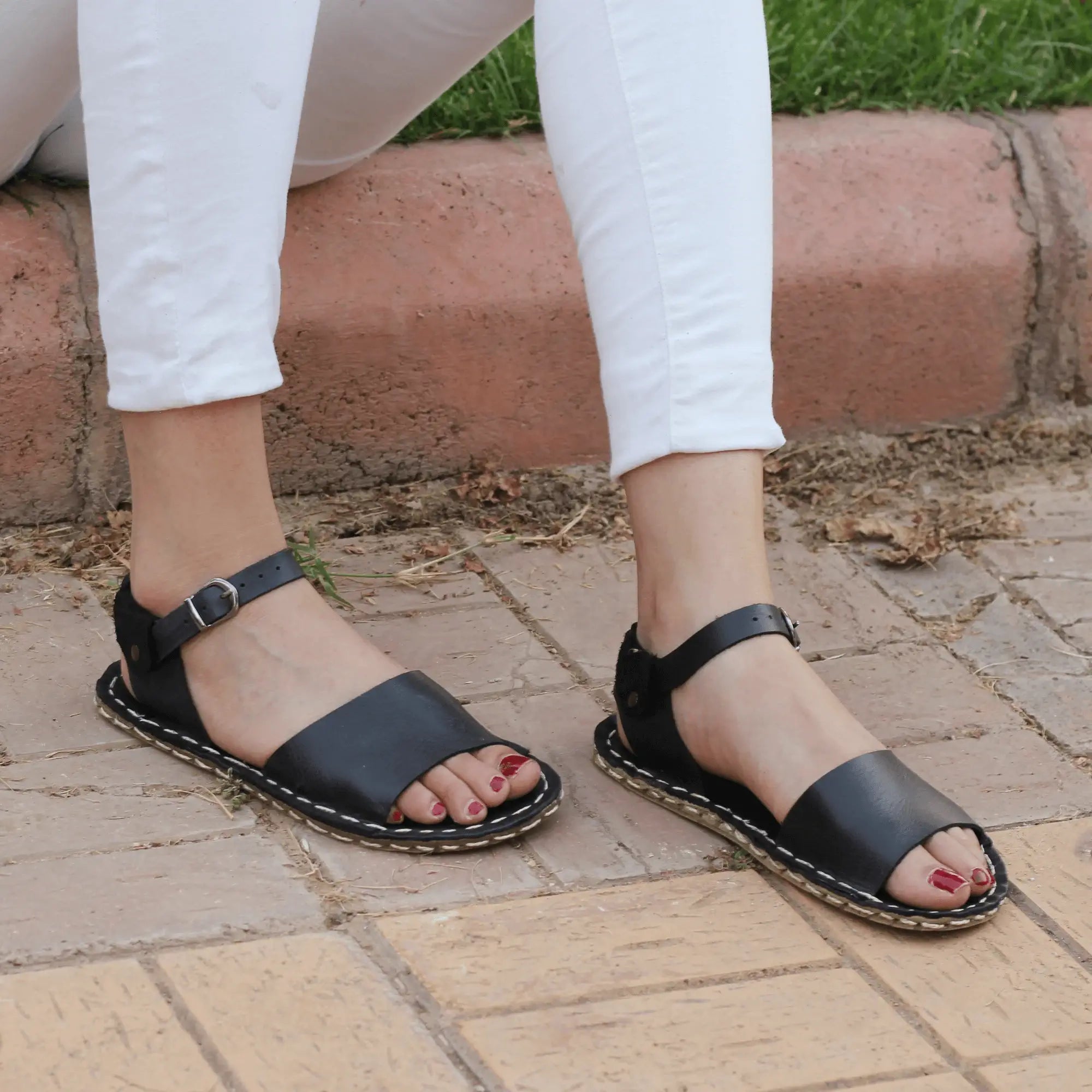
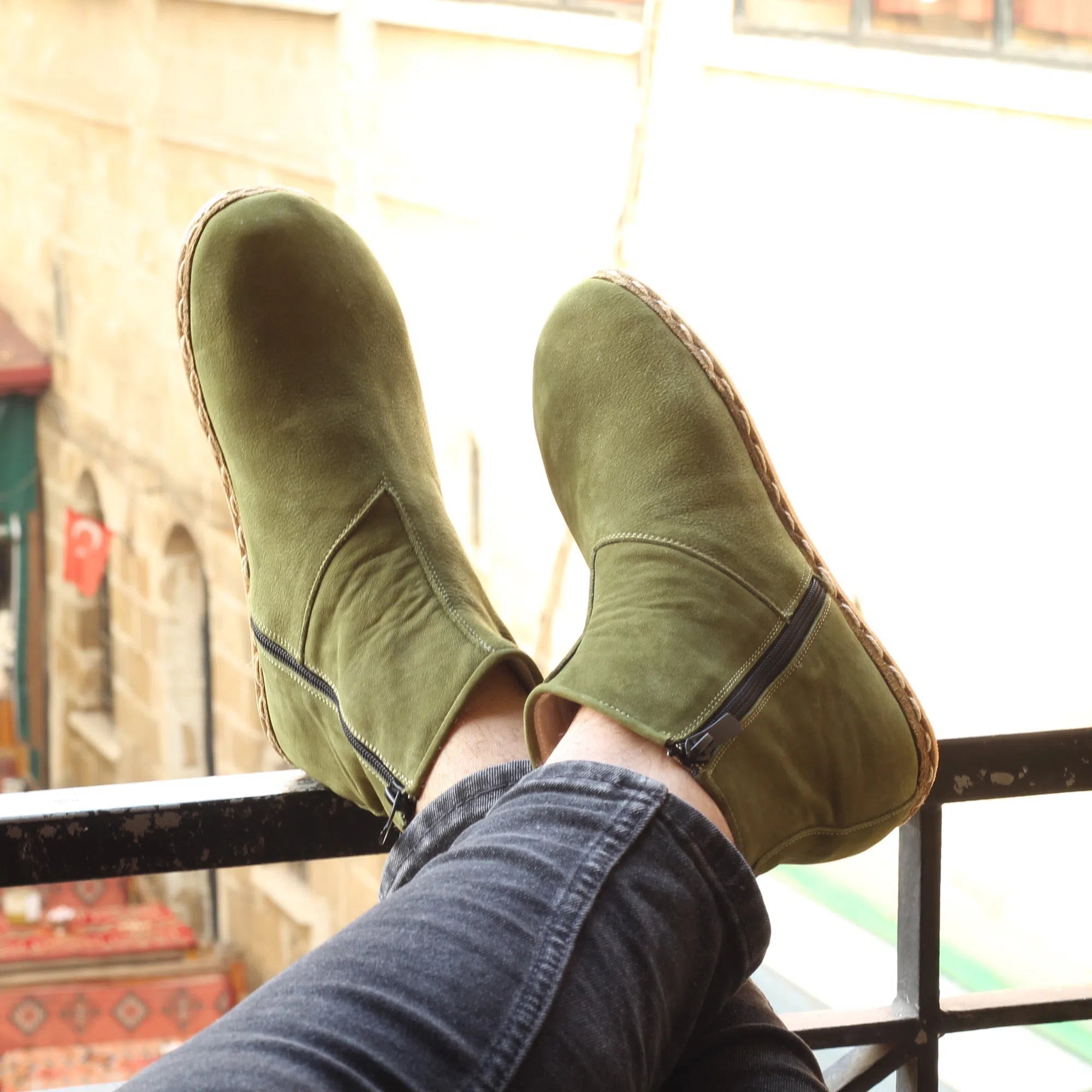
Your toes should not negotiate for room. If they hang over the front edge, press against a strap, or curl to stay inside the sandal, the size is wrong - no matter what number is stamped on the sole. A women's barefoot sandal sizing guide starts with that simple truth: barefoot sandals are made to respect the shape of your feet, not force your feet into the shape of a conventional shoe.
The right fit gives your toes room to spread, keeps the sole under your whole foot, and holds your heel securely without squeezing. It feels less like wearing a stiff shell and more like moving with protection underfoot. That freedom is the point.
Women's Barefoot Sandal Sizing Guide: Begin With Your Feet
Forget the size you usually buy in narrow fashion sandals. Shoe sizes vary across brands, and the last - the foot-shaped form used to make a shoe - matters as much as the number. Handmade leather sandals may also fit differently from sneakers padded with foam or conventional sandals built around a tapered toe shape.
Measure both feet at the end of the day, when they are naturally at their fullest. Stand with your weight evenly distributed on a sheet of paper placed against a wall. Put your heel lightly against the wall, then mark the tip of your longest toe. For some women, that is the second toe rather than the big toe. Measure the distance from the wall edge to your mark in centimeters or inches.
Measure both feet. Most people have one foot that is slightly longer, and the longer measurement should guide your sandal size. If you fall between sizes, consider the sandal design, your foot volume, and how you intend to wear it. A closed, more structured sandal may call for a little more room. An open sandal with adjustable straps can often accommodate a closer fit, as long as your toes and heel remain fully supported by the sole.
Use the brand's individual size chart rather than converting automatically from your usual US size. This is especially true with artisan footwear. At Nefes Shoes, handmade construction and natural leather bring character to every pair, while the stated foot-length measurement remains the best place to start.
Leave room in front of your longest toe
Barefoot sandals need a small amount of length beyond your longest toe. This is often called toe allowance. It gives your foot room to move as you walk, descend hills, and warm up during the day. For most adults, about 0.3 to 0.5 inches, or roughly 8 to 12 millimeters, is a practical range.
Too little space is easy to spot. Your toes approach the edge when you stand, or they reach it on a downhill stride. Over time, that constant bracing can make even a beautiful sandal feel irritating. Too much space can be a problem too, particularly with minimal open styles. An overly long sole may catch the ground in front of you or make the sandal feel disconnected from your foot.
The goal is not a giant gap. It is a clear, usable border around the front of the foot.
Width Matters More Than Most Size Labels Admit
Traditional women's shoes frequently narrow toward the toes because they are designed around a fashion silhouette, not a naturally splayed forefoot. Barefoot sandals take the opposite position. Your forefoot needs a platform that follows its real outline.
When you stand in the sandal, the widest part of your foot should sit comfortably within the sole. Your little toe should not perch on the edge. Your big toe should not be pushed inward by a narrow strap or tapered front. Look down at your feet with your full weight on them, not while sitting. That is when you can see whether the sandal actually supports your natural stance.
A wide toe box does not mean the sandal should feel loose everywhere. The front of your foot needs freedom, while the heel and midfoot need enough security to keep the sole moving with you. This balance is why strap placement matters as much as length and width.
Check your foot volume, not just your width
Two feet can have the same length and width but need different sandal fits. Foot volume refers to how much height and fullness your foot has through the instep and around the midfoot. If you have a high instep, a fixed upper can feel tight even when the sole is the correct size. If your feet are low-volume or narrow through the heel, a sandal can feel unstable unless the straps adjust closely.
Adjustable straps are especially valuable when your feet change through the day, in warm weather, or after long periods on your feet. They let you fine-tune the fit without sacrificing space for the toes. Tightening every strap to stop sliding is not the answer, though. If you must cinch the sandal hard enough to create pressure marks, the style, volume, or size may not be right for your foot.
Leather can soften and conform around pressure points with wear. It can become more supple across the upper, but it will not make a too-short sole longer or a narrow footbed truly wider. Choose the right foundation first, then allow the leather to become more personal with use.
How a Barefoot Sandal Should Feel on Day One
A new leather sandal can feel firmer than a foam-filled shoe, particularly around the straps. That is normal. Pain, numbness, toe crowding, or a hard edge under your foot is not a break-in issue to ignore.
Walk indoors on a clean surface for several minutes. Pay attention to how the sandal responds as your foot bends. Your heel should stay centered rather than drifting off the side. The sole should flex with your step, not slap the ground behind you. Your toes should remain relaxed, not gripping to keep the sandal on.
Check the fit on both feet and while standing, walking, turning, and going up a few stairs. A sandal that feels fine when still may reveal heel lift or toe overhang in motion. If you are trying sandals on after a long day, remember that a little swelling is normal. That makes it a useful time to see whether the fit has enough real-world room.
Sizing by Sandal Style
Open-toe barefoot sandals make it easy to see your fit, but that visibility also makes precision more important. Your toes should remain on the sole throughout a normal stride. A secure ankle or heel strap helps prevent your foot from sliding forward toward the edge.
Toe-loop styles deserve extra attention. The loop should sit comfortably around the toe without rubbing, twisting, or pulling the foot backward. If your big toe feels restricted, do not assume it will simply disappear with wear. A toe loop should guide the sandal, not control your foot.
More enclosed sandal styles can feel different because leather surrounds more of the foot. Allow adequate length at the front and make sure the upper does not compress the top of your toes. If you plan to wear thin socks with a closed sandal during cooler months, measure and try on with those socks in mind. Thick socks can change both volume and length needs.
If You Are New to Barefoot Footwear
The size may be right, yet the feeling may still be new. Zero-drop footwear places your heel and forefoot at the same level, and flexible soles ask your feet and lower legs to participate more actively. If you have spent years in elevated heels, stiff soles, or heavily cushioned shoes, give your body time to adapt.
Start with shorter walks, daily errands, or time around the house. Keep your stride relaxed. Do not size up excessively in search of cushion or size down in pursuit of a sleek look. Neither choice supports natural movement. The proper sandal lets your foot spread, bend, and sense the ground while staying protected by durable materials underfoot.
Common Sizing Mistakes to Avoid
The most common mistake is choosing a familiar number without measuring. The next is judging fit while sitting down, when your foot is shorter and narrower than it is under body weight. Many people also mistake tight straps for security, even though pressure across the forefoot can interfere with comfort and natural toe splay.
Avoid buying a sandal that is just barely long enough. Feet move forward as you walk. Avoid treating leather stretch as a solution for an undersized footbed. And do not compare a minimalist sandal directly to a bulky athletic shoe size without checking the measurements. Different construction creates a different fit experience.
Your feet carry you through every mile, every errand, every quiet moment outside. Give them a sandal that leaves room for them to be feet: wide, capable, grounded, and free to move.