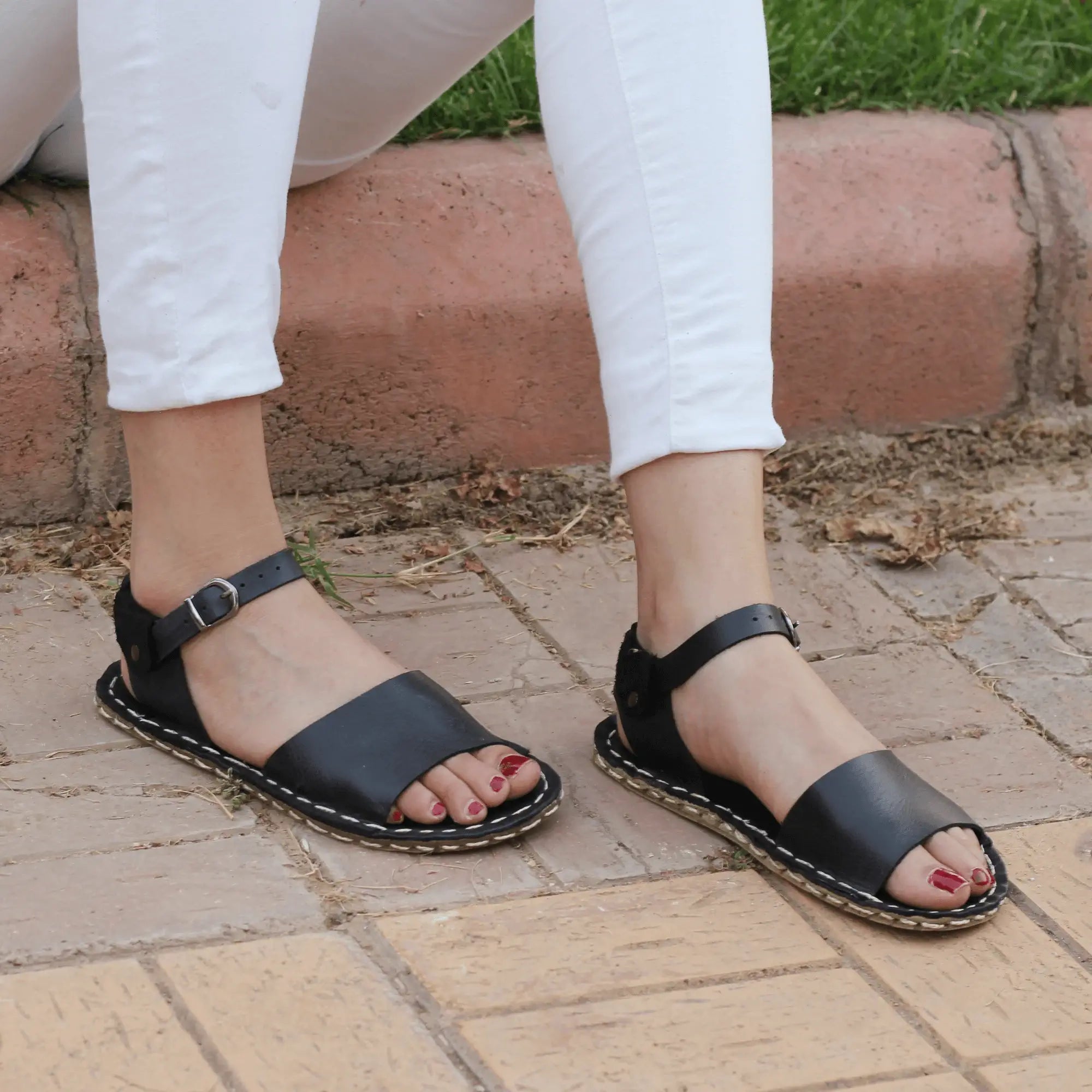
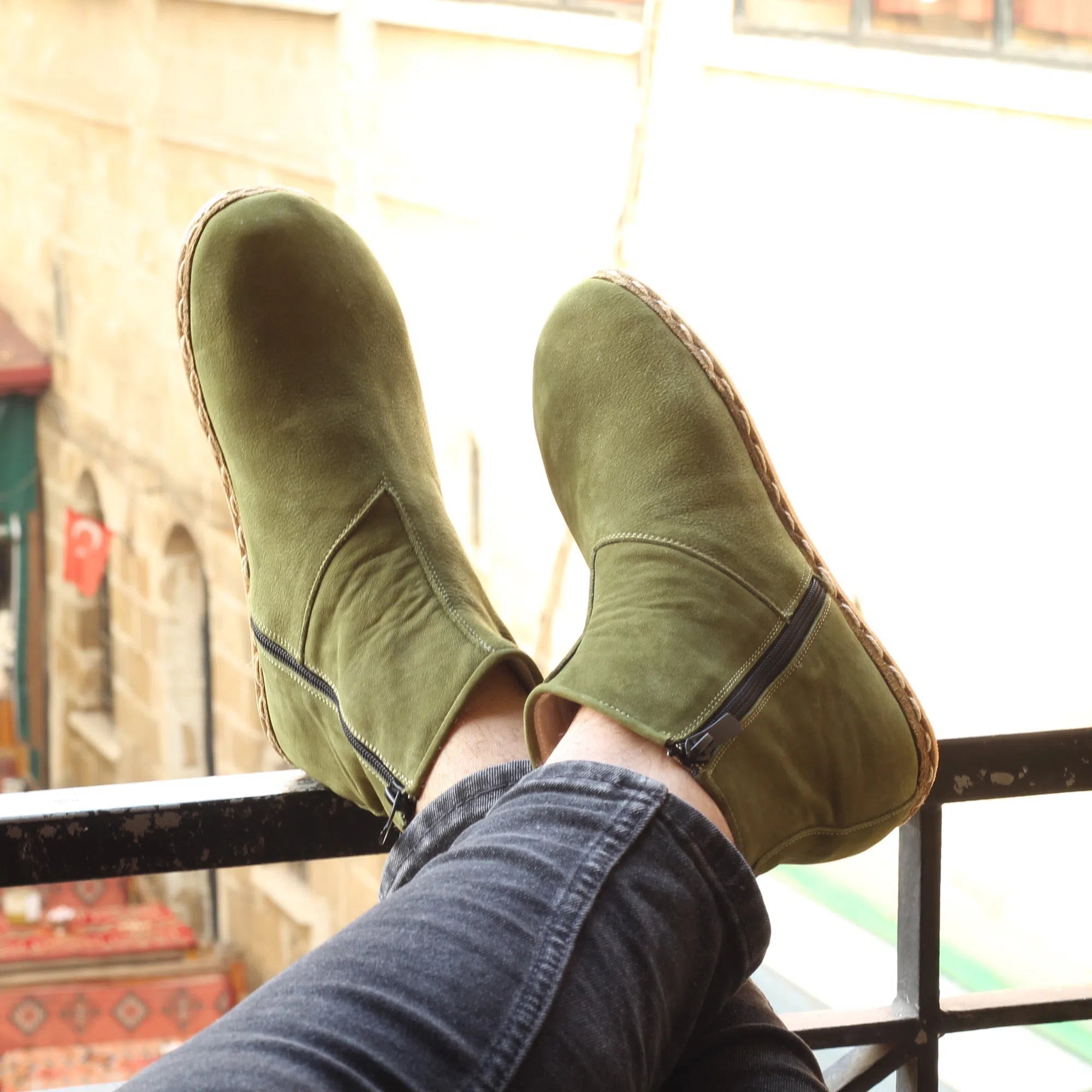
A buffalo leather sole is meant to feel alive underfoot. It flexes, molds gradually to your stride, and lets your feet experience the ground in a way thick synthetic soles never can. To care for buffalo leather soles properly, treat them as natural material, not disposable gear: keep them clean, let them dry slowly, and feed the leather only when it needs it.
That small amount of attention protects more than appearance. It helps preserve flexibility, breathability, and the close-to-earth feel that makes handmade leather footwear different. Natural footwear asks you to leave behind the idea that shoes should be sealed in plastic and replaced every season. Good leather can travel much farther with you.
Why buffalo leather soles need different care
Buffalo leather is valued for its strength, character, and substantial natural grain. In a sole, it offers a grounded, flexible experience that changes with wear. Each step gently burnishes the surface, and each pair develops its own marks, curves, and patina. That is not a flaw. It is evidence that your shoes are becoming yours.
Unlike rubber or foam, leather is porous. It can absorb moisture, dust, road salt, and the natural oils from your skin. It also responds to its environment. Too much water can stiffen it temporarily; too much heat can dry it out; too much heavy conditioner can make it overly soft or slippery.
The goal is not to keep a leather sole looking untouched. The goal is to keep it supple, clean enough to flex freely, and structurally sound. A few scuffs are part of honest wear. Deep cracks, hardening, and persistent dampness are the issues worth preventing.
Start with a dry, gentle clean
Most of the time, buffalo leather soles need less cleaning than people think. After a dry walk, use a soft brush or dry cloth to remove loose dust, soil, and grit from the sole. Pay attention to the edges and the area around stitching, where debris can collect.
If you have stepped through mud, wait until it dries before brushing it away. Rubbing wet mud into leather pushes dirt deeper into the grain and creates more work later. For stuck-on grime, use a barely damp cloth and gentle pressure. The cloth should be damp, not wet enough to leave the leather saturated.
Avoid soaking the soles, holding them under running water, or putting them in a washing machine. Leather and excess water are a poor match, especially when they are followed by hurried drying. The same goes for harsh household cleaners, alcohol wipes, bleach, and strong detergents. These can strip the leather’s natural oils and leave it dry, discolored, or brittle.
What to do after rain or a wet walk
Leather soles can handle everyday life, including the occasional rain shower. But wet conditions call for patience. Remove surface moisture with a clean, absorbent cloth, then place the shoes in a dry room with steady airflow.
Keep them away from radiators, fireplaces, heating vents, hair dryers, and direct, intense sunlight. Fast heat may seem helpful, but it can shrink or stiffen wet leather. Instead, loosely fill the shoes with plain paper to help them hold their shape and draw moisture from inside. Replace the paper if it becomes damp.
Give the pair time to dry completely before wearing it again. This matters even more if your feet perspire heavily or you have worn the shoes for a long day. Rotating between two pairs, when possible, gives natural leather time to breathe and recover.
Condition only when the leather asks for it
Conditioner is useful, but more is not better. Buffalo leather soles do not need to be treated every week. Over-conditioning can darken the leather, soften it excessively, and leave residue that attracts dirt.
Look for signs instead. If the sole appears dry, feels noticeably stiff, or begins to show fine surface cracking, it may be time for a light conditioning. Choose a leather conditioner or balm made for natural leather, ideally one without silicone-heavy coatings or harsh solvents. Products designed to create a thick waterproof film can work against the breathable, natural character of leather.
Before treating the full sole, test a small hidden area near the heel or edge. Leather can deepen in color after conditioning, and that change may be more visible on lighter shades. Apply a very small amount with a soft cloth, work it in gently, and allow it to absorb. Then buff away any excess. The sole should feel nourished, not greasy.
For most regularly worn pairs, conditioning a few times per year is enough. Your climate and wear pattern matter. Dry, hot regions may call for more frequent conditioning, while humid areas may require less. If you wear your shoes almost every day on rough pavement, inspect them more often than someone who uses them primarily indoors or on smooth, dry paths.
Protect the sole without covering its nature
A leather sole will naturally wear faster on abrasive concrete than it will on indoor floors, grass, packed earth, or smooth stone. That is the trade-off for flexibility and direct ground feel. You are choosing a living material and natural movement, not a thick barrier between your feet and the world.
If you expect extended exposure to rain, slush, road salt, or rough urban pavement, reserve your buffalo leather soles for drier days when you can. This is not fragility. It is using the right footwear with intention. Heavy weather and chemical-treated sidewalks are hard on nearly every natural material.
Some people choose to use a leather-safe protective treatment sparingly during wet seasons. This can help reduce water absorption, but it may also alter the finish, color, or breathability of the leather. Test first and use the lightest effective application. A product that promises a plastic-like waterproof shell is usually not the right answer for footwear designed to breathe and move naturally.
Never ignore road salt
Road salt deserves special attention because it can pull moisture from leather and leave pale marks behind. If your soles encounter salt, wipe them with a lightly damp cloth as soon as you can, then let them air-dry naturally. Once fully dry, assess whether the leather needs a very light conditioning.
Do not scrub aggressively. Salt damage often worsens when people attack it with concentrated cleaners or repeated soaking. Gentle removal and patient drying are more effective.
Where you store your shoes affects their life. Keep buffalo leather soles in a cool, dry place with airflow. Avoid sealed plastic bags, damp basements, hot cars, and direct sunlight on a windowsill. Trapped moisture encourages odor and can create conditions leather does not enjoy.
For longer storage, clean off surface dirt first and make sure the shoes are completely dry. Stuff them loosely with paper if they need help holding their shape, then place them in a breathable dust bag or open shelf. Do not stack heavy objects on top of them. Barefoot shoes are designed to flex with your feet, not to be crushed into a different form.
It is also wise to inspect your soles every few weeks if they are in frequent rotation. Check for loose stitching, unusually uneven wear, deep cuts, or sections that have become hard and dry. Addressing a small issue early is far easier than waiting for it to become a repair.
Let wear tell a useful story
The pattern on the bottom of your soles can reveal how you move. More wear on one side of the heel or forefoot is common and does not automatically mean something is wrong. Bodies are individual, and natural gait develops over time, especially if you are transitioning away from raised heels and restrictive conventional shoes.
Still, dramatic uneven wear, discomfort, or a sudden change in how your shoes feel is worth noticing. Give your feet time to adapt, vary your surfaces and activity, and avoid forcing a barefoot transition too quickly. Freedom for the toes and zero-drop alignment can be powerful changes, but your body benefits from a gradual adjustment.
At Nefes Shoes, we believe shoes should support the body’s natural design rather than squeeze it into an artificial shape. Caring for buffalo leather soles is part of that philosophy. You are not preserving a showroom object. You are maintaining a handmade companion built to move, breathe, and collect the evidence of a life well walked.
The best care habit is simple: after each adventure, give your soles a moment of attention. Brush away the grit, dry them patiently when needed, and let the leather age with dignity. A well-worn sole should look like it has been somewhere worth going.