Flat feet change the whole conversation around footwear. If your arches sit low or collapse under load, you have probably been told the same story for years: get more support, more structure, more control. But many people with flat feet find that all that built-in correction can leave their feet weaker, more cramped, and less responsive over time. That is exactly why minimalist shoes for flat feet have become such a compelling alternative.
The idea is not that every flat-footed person should throw away their cushioned shoes overnight. It is that feet are not meant to live in stiff shells forever. They are meant to move, spread, feel the ground, and do some of their own work.
Are minimalist shoes for flat feet a good idea?
Sometimes yes, sometimes not yet. That distinction matters.
Flat feet exist on a spectrum. Some people simply have naturally low arches and no pain at all. Others deal with ankle collapse, plantar fasciitis, tendon irritation, or fatigue after short periods of standing. A foot shape alone does not tell the full story. Function matters more than appearance.
Minimalist footwear can help because it removes the features that often interfere with natural mechanics: raised heels, rigid midsoles, narrow toe boxes, and heavy arch shaping. A flat, flexible sole lets the foot sense the ground. A wide forefoot gives the toes room to spread. Zero-drop construction keeps the heel and forefoot level, which can improve posture and reduce the constant forward pitch created by conventional shoes.
For many people with flat feet, that combination feels surprisingly liberating. Instead of being propped up, the foot is allowed to participate. The muscles of the arch, ankle, and lower leg can begin doing more of the stabilizing they were designed to do.
That said, minimalist shoes are not magic. If your feet are deconditioned, inflamed, or used to years of supportive footwear, a sudden switch can feel harsh. The transition is where people either build strength wisely or push too hard and blame the shoe.
Why conventional support is not always the answer
Support has a place. Acute pain, injury recovery, and certain structural issues can call for more help, at least temporarily. But permanent dependence on rigid support is another matter.
When a shoe dictates the foot's position, the foot often stops working as actively. Over time, that can contribute to weaker intrinsic foot muscles, less toe mobility, and poor proprioception. In plain terms, the foot becomes less capable because the shoe is doing too much.
This is especially common with heavily built-up sneakers that combine arch support, heel elevation, toe spring, and thick foam. They may feel comfortable at first, but comfort in the moment is not always the same as long-term function. A narrow shape can squeeze the forefoot. A raised heel can shift pressure forward. A stiff sole can block the foot from bending and adapting naturally.
Flat feet do not always need to be controlled. Often, they need space, strength, and better sensory input.
What to look for in minimalist shoes for flat feet
The right minimalist shoe should feel like freedom, not punishment. That starts with shape.
Wide toe box
A flat foot often comes with inward collapse and limited toe engagement. If the toes cannot spread, the foot loses one of its built-in stability systems. A wide toe box gives the forefoot room to open up, grip gently, and balance more naturally. This alone can make a major difference in comfort.
Zero-drop sole
A zero-drop shoe keeps the heel and forefoot at the same height. That matters because raised heels can alter alignment all the way up the chain, from ankles to knees to pelvis. Flat-footed wearers often do better when posture is not being pushed forward by the shoe.
Flexibility
Your foot should be able to bend, twist, and adapt to the ground. A minimalist sole should move with you, not force a stiff gait pattern. Flexibility also encourages the foot muscles to engage more actively.
Ground feel
Thin soles are not just about philosophy. They improve feedback. When the foot can sense terrain better, balance and step quality often improve. For someone with flat feet, better sensory awareness can support better control.
Natural materials
Leather, especially when crafted well, molds to the foot over time in a way synthetic uppers often do not. Breathability matters too. Feet that are hot, sweaty, and compressed are not functioning at their best. Natural materials can support comfort without adding unnecessary bulk.
What minimalist shoes cannot do
They cannot instantly rebuild your feet. They cannot erase every form of pain. And they cannot replace common sense.
If you have sharp heel pain, posterior tibial tendon issues, severe overpronation with instability, or a recent injury, start carefully. Some people benefit from using minimalist shoes for shorter periods while continuing rehab, mobility work, or strengthening. Others may need a slower path or professional guidance before wearing them all day.
The goal is not to prove how tough you are. The goal is to create healthier movement.
The transition matters more than the label
A shoe can be beautifully designed and still be the wrong move if you rush into it.
Most people with flat feet have spent years in thick soles and structured shoes. Their calves may be tight. Their ankles may be stiff. Their toes may barely move independently. If that is your baseline, switching straight to all-day minimalist wear is like going from a desk job to sprint repeats. The issue is not the concept. It is dosage.
Start with short walks, errands, or time around the house. Pay attention to fatigue in the arches, calves, and ankles. Mild muscle soreness can be normal. Joint pain, lingering inflammation, or sharp strain is a sign to back off.
Simple foot-strength work helps. Toe spreads, short foot exercises, calf raises, and slow balance drills can support the transition. Walking on natural surfaces also helps the body learn to load more evenly.
Progress is usually quieter than people expect. Better balance. Less toe cramping. More awareness of how you land. A feeling that the foot is waking up instead of being held in place.
Style still matters, and it should
A lot of people want natural footwear but do not want to look like they gave up on personal style. Fair enough. The good news is that minimalist design has grown up.
For flat-footed shoppers, the best shoe is the one you will actually wear consistently. That means it has to work with your life. If it only makes sense for workouts or short walks, it may never become part of your routine. Well-made minimalist leather shoes offer a different path. They bring natural movement into daily life without the synthetic, overly athletic look that dominates the market.
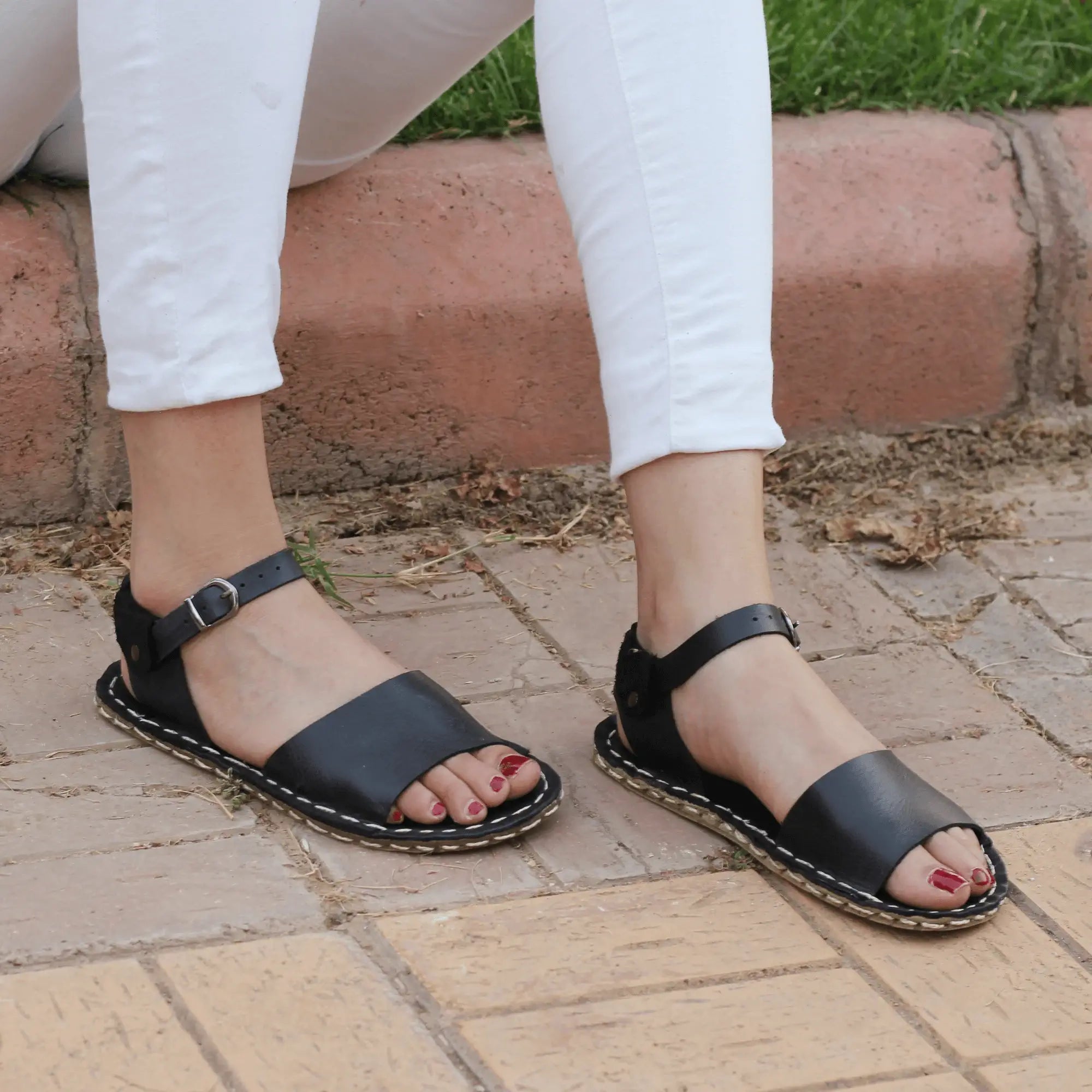
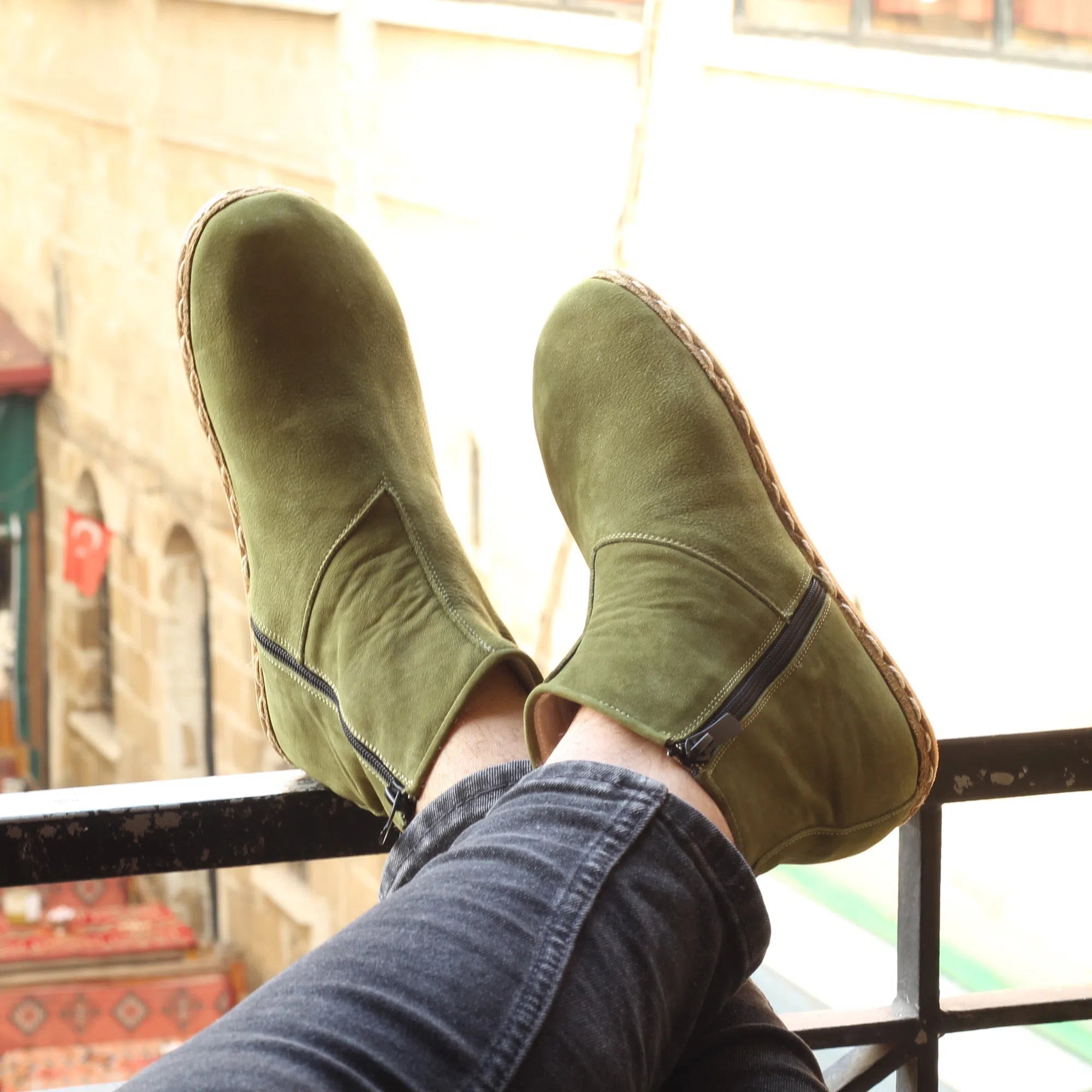
That is where craftsmanship matters. Handmade leather footwear can combine flexibility, wide fit, and zero-drop structure with real visual character. It does not have to look medical. It does not have to look disposable. It can feel grounded in every sense of the word.
A few signs you found the right pair
The right pair of minimalist shoes for flat feet usually feels secure without squeezing. Your toes can relax and spread. Your foot is not sliding forward. The sole bends where your foot bends. After a short break-in period, you feel more aware of your steps, not more restricted by them.
You may also notice that your posture changes subtly. Standing becomes less of a lean and more of a stack. Walking feels smoother. Some people even report less fatigue in the knees and hips once the foot is no longer trapped in a raised, rigid platform.
If the shoe forces your foot inward, pinches the forefoot, or feels slappy and unstable, keep looking. Minimalism only works when the design respects real anatomy.
The bigger shift
Choosing different shoes is often about more than shoes. It is a decision to stop treating the body like a problem that always needs external correction. Flat feet are not a personal failure. They are a starting point.
The better question is not, How much support can I add? It is, What does my foot need in order to function well? For many people, the answer includes space, flexibility, natural materials, and time to rebuild trust in their own movement. That is the philosophy behind Nefes Shoes and the reason so many people are stepping away from conventional footwear that disconnects them from the ground.
Your feet do not need a cage dressed up as comfort. They need room to remember what they were made to do.