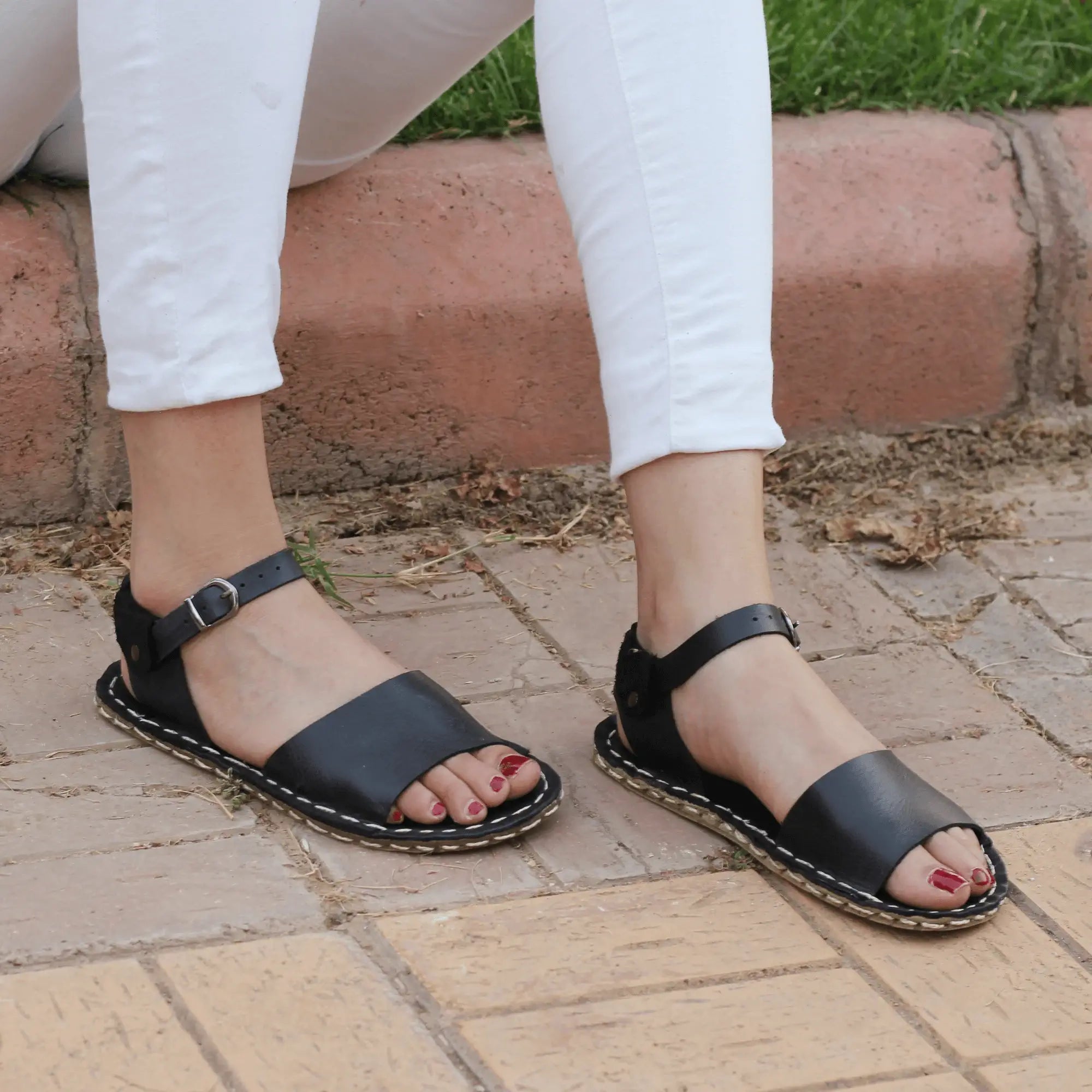
Most shoes cut you off from the ground before you take your second step. Thick rubber, synthetic foam, raised heels, and plastic layers do more than change how your foot moves - they create a barrier between your body and the earth. If you are trying to learn how to ground your shoes, the real question is not just what to add. It is what to stop putting between your feet and the ground in the first place.
Grounding footwear is often treated like a gadget problem. Add a plug-in part, attach a conductive tab, buy an insert, and you are done. That is not always wrong, but it misses the bigger point. A shoe can only help you stay connected to the earth if its design, materials, and construction make that connection possible.
What grounding in shoes actually depends on
A grounded shoe needs a conductive path from your body to the earth. That path starts at your skin, moves through the sock or insole area, travels through the shoe itself, and ends at the outsole touching a natural surface like soil, grass, sand, or unsealed concrete. If one part of that path is blocked by thick synthetic material, the effect can be reduced or lost.
This is why conventional footwear works against grounding on multiple levels. Most modern shoes are built with foam midsoles, rubber outsoles, synthetic liners, and insulated footbeds. They may feel cushioned, but they also separate your foot from the surface beneath you. Even worse, many of them squeeze the toes and lift the heel, which works against natural alignment at the same time.
That is where grounding shoes differ. They are usually simpler, flatter, and made with more natural materials. Many also use conductive design elements intended to maintain contact between the foot and the earth.
How to ground your shoes without overcomplicating it
If you want a shoe that supports grounding, start with the basics. The simplest approach is to choose footwear already built for it. Handmade minimalist shoes with leather construction and conductive outsoles or grounding components are usually the most reliable option because the connection is designed into the shoe rather than patched on later.
If you already own shoes and want to modify them, there are a few ways people try to create conductivity. The most common is adding a conductive plug, rivet, or copper element through the sole so it touches both the ground and the footbed side of the shoe. In theory, this creates a direct path. In practice, it depends on the shoe.
A thin, flexible sole is easier to work with than a thick athletic sole full of foam layers. A leather insole is more favorable than a heavily padded synthetic one. And if the rest of the shoe is insulated with plastics and petroleum-based materials, one small conductive piece may not do as much as expected.
So yes, you can modify a shoe. But no, every shoe is not worth modifying.
Start with the materials
If you are serious about learning how to ground your shoes, pay attention to what they are made of. Leather matters. Natural fiber linings matter. Thin soles matter. Zero-drop design matters because it keeps your posture more natural and your weight more evenly distributed across the foot.
Buffalo leather soles, for example, are valued by many grounding shoe wearers because they are natural, flexible, and capable of supporting a more direct relationship with the earth than bulky synthetic soles. That does not mean every leather sole performs the same way in every environment. Moisture, wear, surface type, and thickness all play a role. But natural materials tend to support the goal far better than the standard formula of rubber, glue, foam, and plastic.
Be honest about the surface you walk on
Even the best grounding shoe cannot connect you to asphalt coated with sealants, certain indoor flooring, or synthetic turf. The surface under you matters just as much as the shoe on you.
Natural ground is the clearest choice. Grass, dirt, sand, stone, and unsealed concrete are generally better surfaces for earthing than heavily treated urban materials. If you wear grounding footwear all day but spend that day on laminated office floors and sealed parking lots, your actual connection may be limited.
That is not a reason to give up. It just means your expectations should match your environment.
Can you make regular shoes grounding shoes?
Sometimes, but there are trade-offs.
If the shoe is already minimalist, uses natural materials, and has a relatively thin sole, adding a conductive element may help. If the shoe is a standard sneaker with thick foam, synthetic mesh, and a heavily insulated outsole, the result may be disappointing. You might create a small conductive point, but still keep most of your foot suspended above layers designed to block contact.
There is also the comfort question. Drilling or inserting metal into a shoe can create pressure points if the modification is not done carefully. A grounding feature should not make the shoe awkward, stiff, or irritating to wear. If it does, you will not wear it enough for it to matter.
Durability matters too. DIY modifications can loosen over time, especially in flexible shoes. Water exposure, friction, and repeated movement can all affect performance.
What to avoid when choosing or modifying grounding footwear
The biggest mistake is focusing on a single grounding feature while ignoring the whole shoe. A conductive plug does not fix a narrow toe box. A metal rivet does not undo a raised heel. A grounding symbol on marketing material does not change the fact that the shoe may still be built like a conventional shoe that restricts natural movement.
Look for footwear that lets the foot function the way it was meant to. That means enough width for natural toe splay, a flexible sole that bends with the foot, no heel lift, and materials that breathe instead of trapping heat and sweat. Grounding should work with foot health, not distract from it.
Another mistake is assuming more cushioning is always better. It is usually better for selling shoes, not for helping your feet move naturally. Thick soles mute sensation, limit feedback from the ground, and often encourage heavier foot strikes. If your goal is reconnection, more material is rarely the answer.
How to test whether your grounded shoes make sense for your lifestyle
The right shoe depends on how and where you live. Someone walking mostly on city sidewalks will need a different balance of durability and ground feel than someone spending time in a yard, garden, or coastal area. A leather-soled moccasin may feel incredible in one setting and impractical in another.
This is where a lot of buyers get stuck. They want a single shoe that does everything. Realistically, grounding footwear works best when it matches your daily surfaces and habits. For some people that means a sandal for warm weather and a leather boot for colder months. For others it means keeping one pair specifically for outdoor grounding time and another for errands.
If you are new to minimalist or grounding footwear, give your body time to adjust. A thinner sole and flatter platform can wake up muscles and movement patterns that conventional shoes have muted for years. That transition can feel freeing, but it should still be gradual.
The better question is not just how to ground your shoes
It is how to stop wearing shoes that fight your body.
A grounded shoe should do more than conduct. It should let your toes spread, your arch move, and your posture settle into something more natural. It should breathe. It should flex. It should feel like protection, not confinement.
That is why handmade minimalist footwear stands apart from mass-market comfort shoes. The goal is not to pile on features. The goal is to remove what never belonged there - the stiff cushioning, the elevated heel, the narrow front, the synthetic shell - and let the foot do its job.
For people who care about wellness, that shift is bigger than a shoe choice. It changes how walking feels. It changes how long you want to stay outside. It changes whether your footwear supports your body or dulls it.
At Nefes Shoes, that belief is built into the design philosophy: health begins with the feet, and shoes should connect you to the earth rather than insulate you from it.
If you want grounded shoes, choose fewer barriers, better materials, and a design that respects the shape and function of the human foot. Start there, and every step has a better chance of feeling like it belongs to you again.