Imagine you’re in a doctor’s office complaining about random static shocks. Your physician leans back and says, “To release built-up electrical charge, you either need to walk barefoot on the earth or wear shoes that conduct electricity.” Most of us don’t have the time (or climate) to stroll barefoot all day. That’s where thoughtfully designed grounding shoes come into play.

In this article I’ll blend medical insight on static electricity with the experience of a Turkish shoemaker who crafts conductive footwear. The goal isn’t to sell magical cures; it’s to explain how handmade leather shoes with copper rivets can help neutralize surplus charge. Along the way we’ll compare conductive footwear to conventional shoes, review scientific discussions from mainstream sources, and link to medical reading for context.
Why does static electricity build up?

Our bodies are natural conductors. As we move, electrons transfer between our skin, clothing, and surrounding surfaces. When you shuffle across a carpet in wool socks, charge can accumulate on your body. Touch a metal doorknob and you’ll feel a shock as the excess charge rapidly equalizes.
-
Friction-induced charge: Carpets, rubber soles, and synthetic fabrics can behave as insulators. Friction makes it easier for charge to accumulate on the surface.
-
Dry air: Humidity helps static dissipate; dry winter air makes static buildup more noticeable.
-
Insulating footwear: Many modern rubber/plastic soles reduce contact between your body and the ground.
Static buildup isn’t usually dangerous, but it can be annoying and uncomfortable. Where “grounding” enters the conversation is the idea that giving charge a consistent path to the Earth may reduce that buildup—at least at the level of physics. Claims beyond that (sleep, inflammation, etc.) are still debated and researched.
A doctor’s perspective: what does evidence say about grounding?
“Earthing (grounding) is about having direct contact with the surface of the Earth—barefoot outdoors—or using a grounded product indoors,” a clinician might explain. “Some people report benefits, but research is limited. Don’t replace medical care with earthing.”
Mainstream medical sources describe grounding as a practice people use for well-being, but they also emphasize that evidence is not definitive and that safety matters. Two helpful starting points:
The shoemaker’s craft: why materials change everything
Now let’s switch hats—from clinic to workshop.
As a craftsman at Nefes, I’ve spent years hand-stitching traditional yemeni-inspired footwear using natural leather. When customers ask about grounding shoes, I always start with one principle: material is the whole game. If the bottom of your shoe is built like an electrical wall, “grounding” can’t happen. If it’s built as a pathway, it can—at least in a basic electrical sense.
Conductive vs. insulating footwear materials (practical comparison)
| Material / Design |
Typical behavior |
What it means for “ground contact” |
| Natural leather outsole |
Can conduct more than rubber, especially with moisture |
May allow charge to dissipate more easily than thick rubber soles |
| Copper insert / copper rivet pathway |
Highly conductive metal |
Creates a deliberate channel from footbed to ground surface |
| Rubber / plastic outsole |
Often insulating |
Tends to block charge movement to ground |
| Industrial ESD shoes (special designs) |
Engineered to dissipate static |
Made for workplaces that require controlled electrostatic discharge (different goal than “wellness”) |
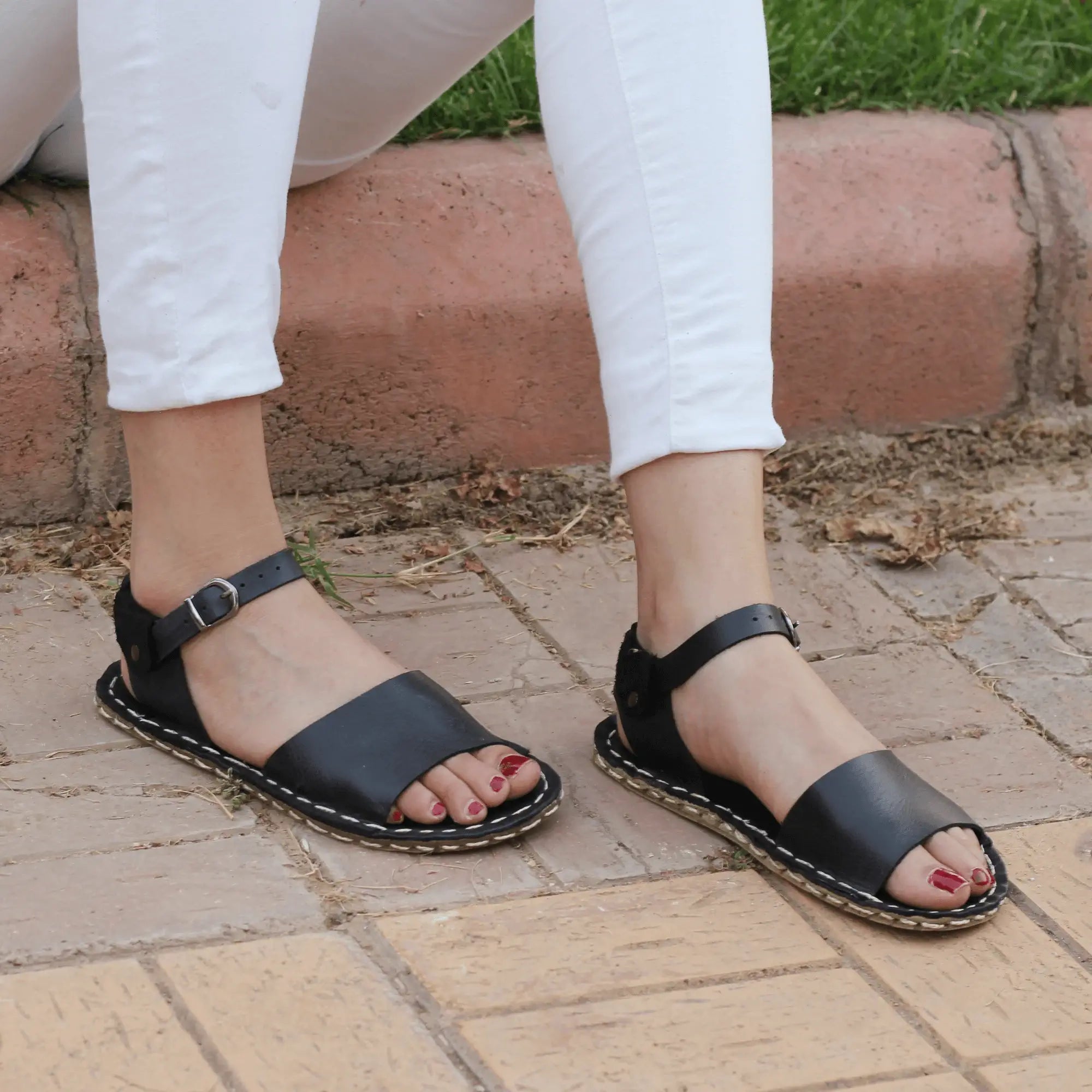
In Nefes grounding designs, the concept is simple: a natural leather base, a flexible structure, and a copper pathway. Not for “magic healing”—but for a clean, physical route for charge equalization while still protecting your feet.

What are grounding shoes?
Grounding shoes are footwear designed to create a conductive path between your body and the Earth, often using conductive materials (like leather outsoles and metal inserts) so static charge may dissipate more easily compared to fully insulating rubber soles.
Research meets craftsmanship: a balanced view
Here’s the honest synthesis:
-
Physics part (solid): If there’s a conductive path to ground, charge equalization is possible.
-
Health claim part (uncertain): Some small studies and many personal reports exist, but large, rigorous trials are limited. Medical sources warn not to treat grounding as a replacement for care.
-
Practical part (useful): Natural, flexible, foot-shaped shoes can improve comfort, posture, and gait mechanics for many people—separate from grounding.
How to choose and use grounding shoes (without fooling yourself)
-
Choose natural contact: Look for minimal layers between foot and ground—thin, flexible construction helps.
-
Avoid “coated” barriers: Some coatings and synthetic layers can behave like insulation.
-
Wide toe box + zero drop: These barefoot fundamentals help natural movement and comfort for many wearers.
-
Use them on real surfaces: Grass, soil, sand (especially slightly damp ground) tends to improve conductivity compared to dry indoor floors.
-
Safety first: If you have neuropathy, diabetes-related foot risk, open wounds, immune issues, or balance problems, consult a clinician before barefoot-style transitions.

Conclusion: the grounded middle path

If a doctor tells a patient “walk barefoot or use conductive footwear,” the most responsible response is: understand the physics, respect the limits of current evidence, and choose footwear that supports healthy movement without making medical promises.
Nefes Shoes exists exactly at that intersection: traditional handcraft, natural leather, barefoot biomechanics, and an intentional conductive pathway for those who want it—built for real life, not laboratory fantasies.
Explore our handcrafted barefoot and grounding-inspired designs at nefesshoes.com.